

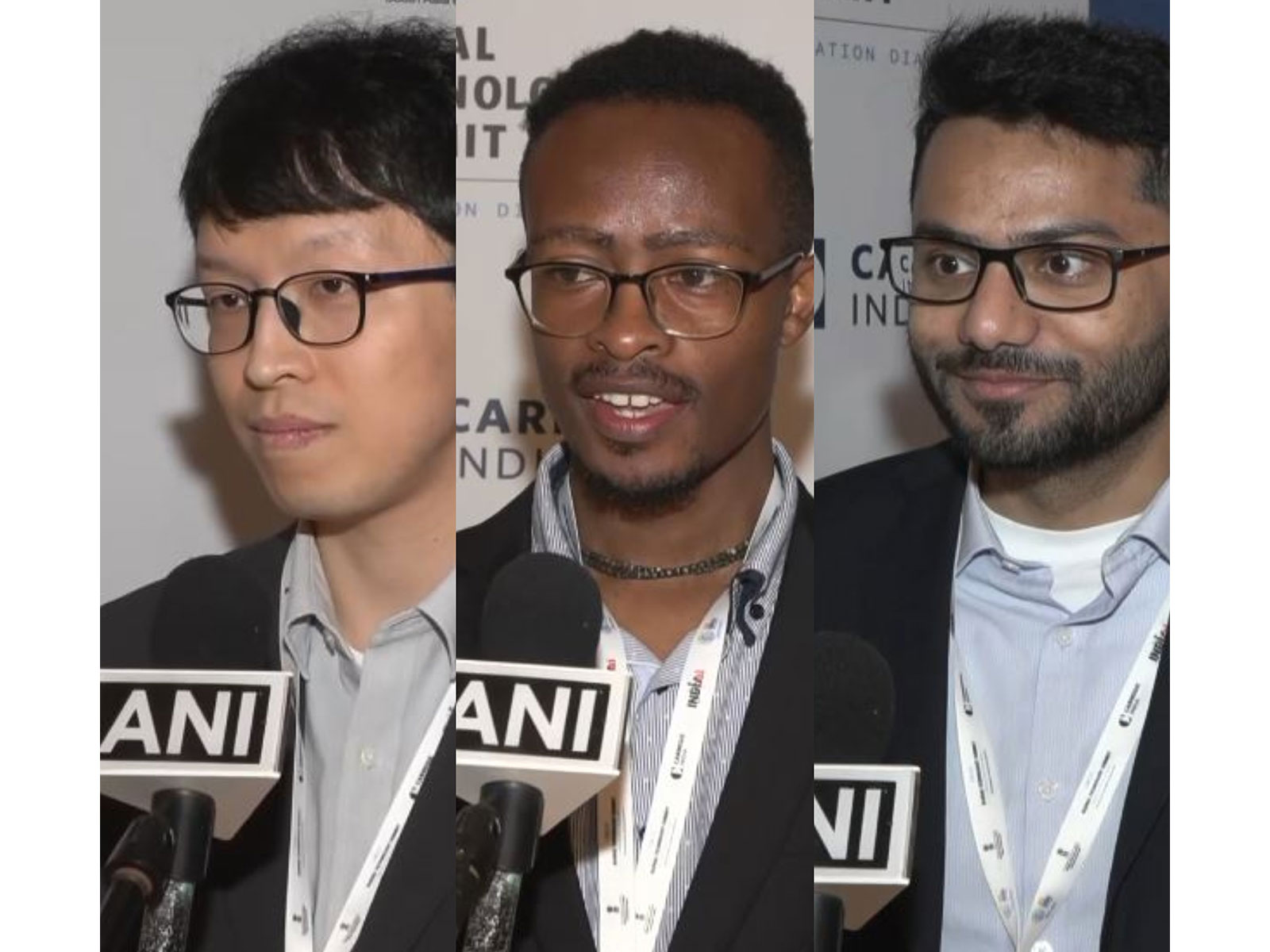
New Delhi [India], December 11 (ANI): The Global Technology Summit Innovation Dialogue, hosted by Carnegie India, saw participation across a wide range of AI use cases, from efforts to ease farmers’ lives to applications for animal care, leveraging the emerging technology.
Speaking to ANI on the sidelines of the Carnegie Global Technology Summit 2025, Changmin Lee, Chief Technology Officer at Iscilab Cooperation, based in South Korea, discussed how his company uses AI for animal biometrics.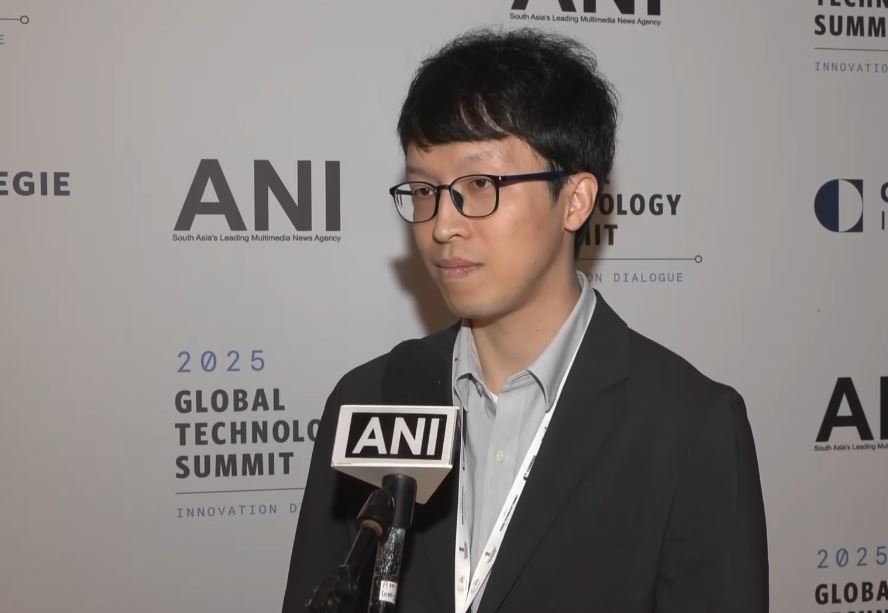
“So our company mostly focuses on the animal biometrics for identification. For example, if you have your dog, each of the dog has their specific pattern on their nose. So we can identify each of the dogs using the specific nose pattern. then also not only dog, also cat, cattles, and even the goats have the specific pattern for their nose. So we are focusing on that, identifying them using the specific pattern. Also, we are focusing on horses as well. But the horses doesn’t have a specific pattern on the nose. So we utilize their face and body shapes and the specific pattern on the leg and body,” he told ANI.
“So it’s kind of that sometimes basically in South Korea we are microchipping the dogs and cattle but sometimes the microchip is recognized by the device. In that case we cannot know, who owns this dog. If the dog is lost and somebody abandoned the dog, we cannot recognize them. In that case, dog nose is a unique identifier so that if we just capture nose print with your smartphone and then we just search it, identify who’s the owner, who abandoned this dog and other cases.”
He said they are focusing on the nose image, to identify if there’s any health issue with the dog or cattle.
“We are using AI. So we capture the image, we identify the nose from the image. Once we identify the nose, we extract the region of interest, specifically the center of the nose area, and we extract pattern from the image, and then we compare them like fingerprints. And then, especially for horses, we capture, recording the video while the horses are walking. And by looking at the leg movement, we can identify them, whether there is any issue with their legs and bodies. Yes, actually we are already servicing our nose print biometrics for Australia, greyhound racing and also we are trying to contact lots of the other countries who grows the cattle because there’s lots of countries that grow the cattle, lots of them, right? Actually, I’m trying to share our use cases for animal biometrics with the AI Summit. Because yesterday when I take a look at all the discussion, mostly they are talking about AI with the large, lengthy models and other cases. So I thought our use case could be unique and then it could be useful to share to everybody,” Lee concluded.
Paras Kalura, Chief Operating Officer, at Migrasia, said they solve issues around exploitation of migrant workers and end what he termed modern slavery. 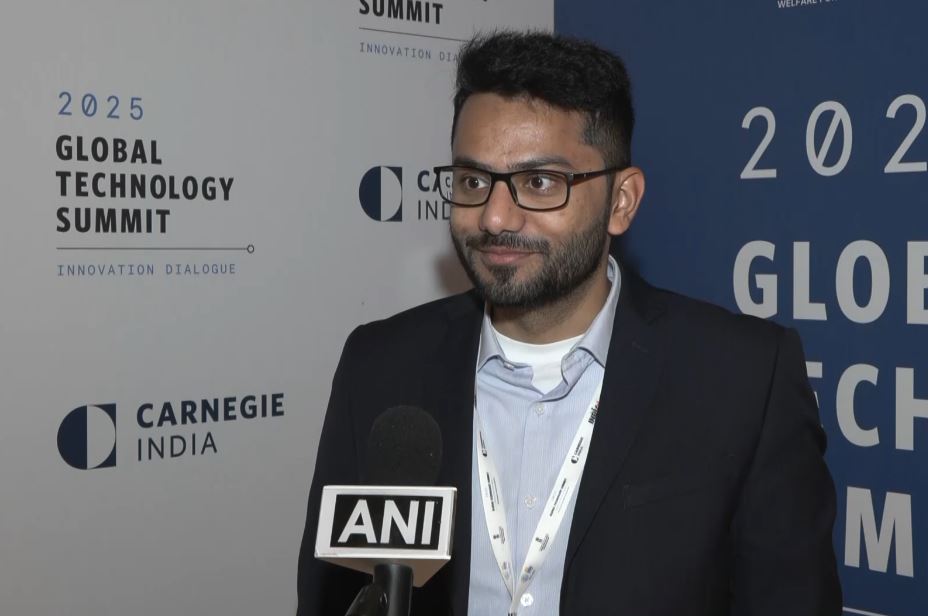
“So for us, we believe technology is at the forefront of a lot of our case work. We use our digital mediums to reach out to migrants at larger scale. So even with a smaller team, Migrasia is able to reach migrants in over 50 plus jurisdictions by using commonly used social media channels,” he said, speaking to ANI.
For their specific use case, they have developed am AI Chatbot, which interacts with migrant workers, helps them, provides them information in their local native languages.
“We work with migrants from Philippines and Indonesia, predominantly in over 50 plus jurisdictions. So, our AI Chatbot, assist them access the right information, depending on the jurisdiction where they’re based, and also helps in triaging and sending out the cases to our human migration specialists, who take over the cases where there are severe instances of labour exploitation,” Kalura said.
As per ILO estimates there are 160 million plus migrants globally, he said.
“We currently predominantly work with East Asian migrants and as we scale our work we need better data using technology and we need to work with the relevant government authorities in order to scale and provide our services to migrants at large. So for us, we want to keep looking at new corridors. As of right now, like I mentioned, we predominantly work with Filipino and Indonesian migrants. But as we scale our work, we look for new avenues and major migrant sending and receiving countries. So India is also one of the big South Asian migrant sending countries. Majority of low-skilled, semi-skilled migrants from India currently migrate to Middle East. We have a decent presence in the Middle East working with our current beneficiary group. the scope of services, it’s just that we need to identify the right remedial pathways for migrants from India. So as and when we expand our network of grassroots organizations, we would be able to better help our migrants from South Asia. So in order to leverage the current technology landscape, it is important that there is a common discourse among civil society partners who are working towards developing solutions for the benefit of the larger society. And that’s what I’m here to do. I’m here to share our AI adoption journey with the population, with the current attendees. And hopefully, it can provide more insights,” he said, when asked whether he’s looking at India for making inroads.
Michael Ngugi Michuki, Lead Software Developer, Green Dreams Tech, based in Kenya, whose company deals with empowering farmers with technology, said they support farmers with connections, resources to practice regenerative agriculture to achieve food security.
“Initially we developed our platform to be very simple and accessible to the farmers who cannot use smartphones. So we bridging the divide. And yes, we’ve employed AI so that it can be able to solve query-based information. That means farmers can ask our platforms questions about to take care of their livestock, what are the best practices for farming, and also learning about their own personal health,” Michael Ngugi Michuki told ANI.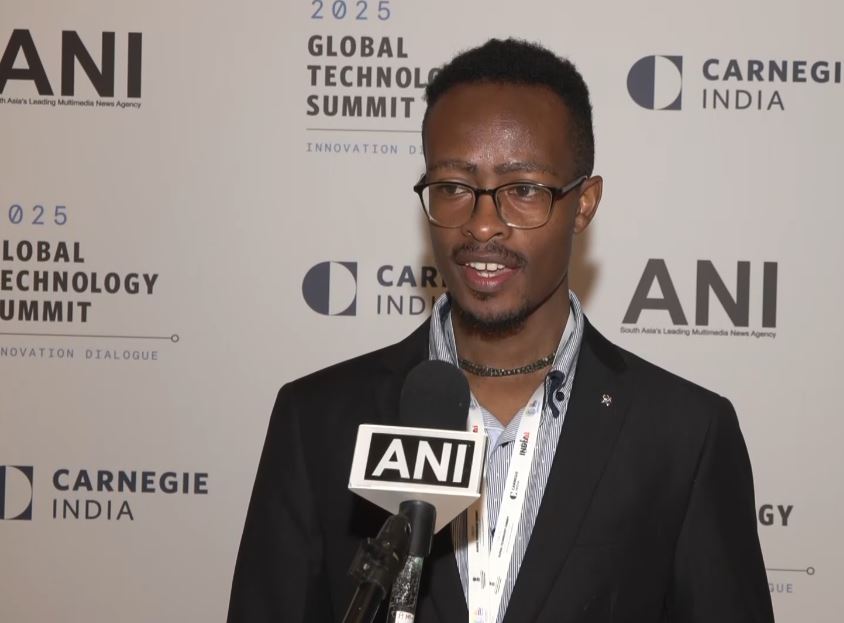
“Yes, it helps farmers in the sense that when we think about our daily lives, the biggest gap that we have is education. For a person who has a farm, most people get their knowledge from their parents. And so they may not have the best practices. So for us, we give smallholder farmers best practice advice and continuous education, which they learn every day. So it’s like we send them five messages every day. So you can imagine having a university on your phone, and you get the most nutritious information. So we focus on that,” he added.
About the Carnegie India event, he said it was a wonderful event bringing together people from around the world.
“We all have the same goal and that’s to improve our world. So I think this is a great platform. I’ve got to meet some very nice people and companies and their speakers today are teaching us some new things so that we can be able to shape the future,” he concluded.
Carnegie India is hosting the Global Technology Summit (GTS), an innovation dialogue on December 11 in New Delhi as an official pre-summit event for the upcoming AI Impact Summit 2026, scheduled to be held in New Delhi from February 15-20, 2026.
AI is reshaping how we live, work, and solve problems, from diagnosing diseases to predicting crop yields, from making education accessible to transforming public service delivery. India now prepares to host the AI Impact Summit in February 2026. (ANI)
Disclaimer: This story is auto-generated from a syndicated feed of ANI; only the image & headline may have been reworked by News Services Division of World News Network Inc Ltd and Palghar News and Pune News and World News

HINDI, MARATHI, GUJARATI, TAMIL, TELUGU, BENGALI, KANNADA, ORIYA, PUNJABI, URDU, MALAYALAM
For more details and packages